
MONITORING & INSPECTION ROBOTS
MONITORING & INSPECTION ROBOTS
Monitoring & Inspection Robots: Eyes That Never Close, Data That Never Lies
Problems don't announce themselves. A crack in infrastructure spreads silently for months before failure becomes catastrophic. A plant disease establishes itself in isolated patches long before symptoms become visible across entire fields. Equipment deteriorates gradually, each micro-degradation unnoticed until the moment something breaks entirely. The challenge has always been the same: problems hide until they're expensive to fix.
Traditional monitoring relies on periodic inspections — someone walking rows, climbing structures, or reviewing footage after damage has already occurred. It's inherently reactive: you're always discovering problems after they've progressed, responding rather than preventing, managing crises rather than forestalling them. Monitoring and inspection robots flip this dynamic entirely.
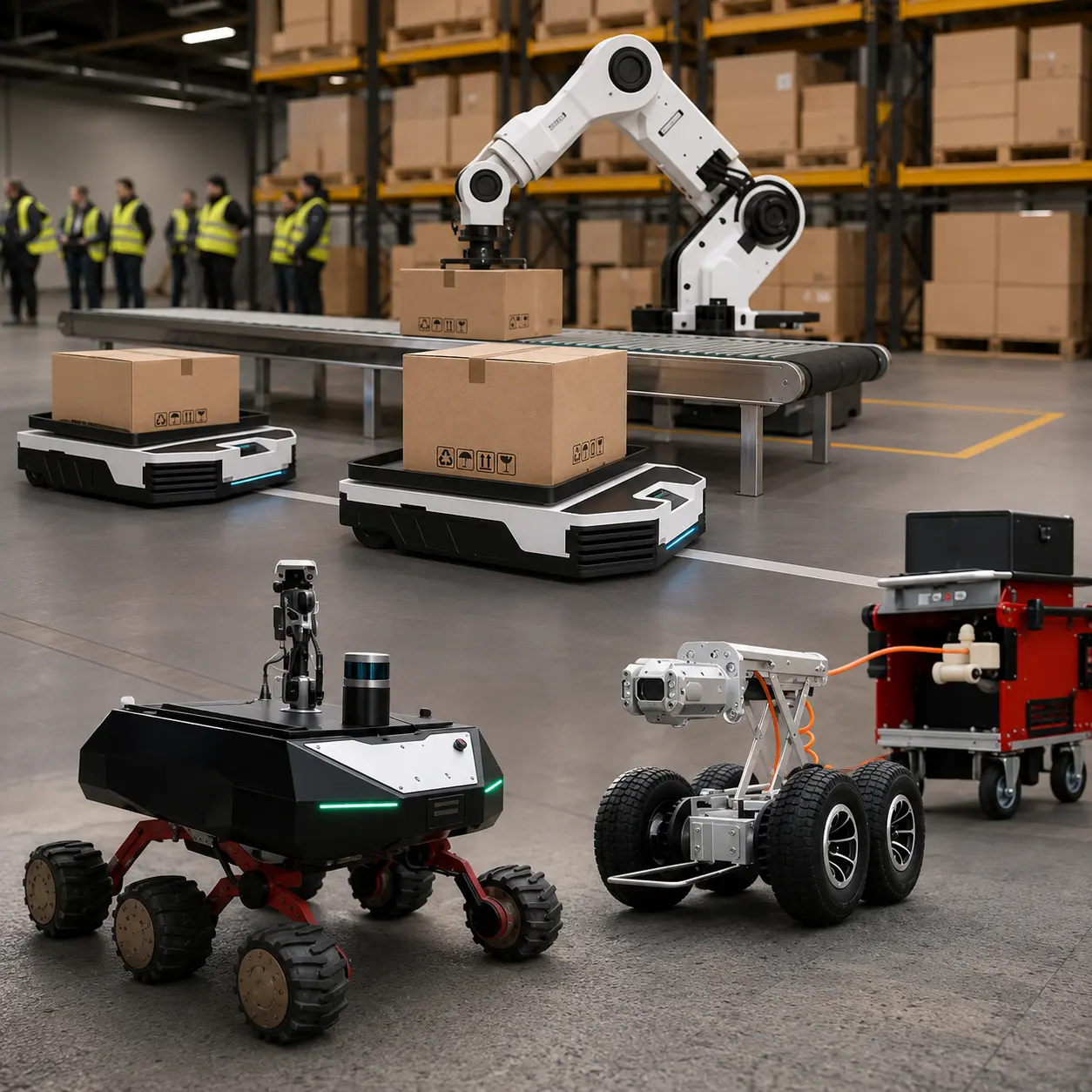
Moving autonomously through fields, facilities, and infrastructure systems, these robots observe continuously, capturing data that reveals problems while they're still small — crop stress developing before visible symptoms emerge, equipment wear patterns detectable weeks before failure, structural degradation identifiable before it threatens safety. They work tirelessly across 24-hour cycles, indifferent to weather or darkness, gathering intelligence that human eyes simply cannot sustain.
For operators, facility managers, and agribusinesses, continuous monitoring translates directly to prevention. Early intervention on crop stress prevents yield loss. Equipment problems caught early avoid expensive downtime. Infrastructure concerns identified early prevent catastrophic failure and safety liability.
For manufacturers and suppliers in this emerging category, the opportunity is substantial: connecting with enterprises that understand prevention is always cheaper than crisis response, and that continuous intelligence transforms management from reactive to genuinely strategic.
This is where technology becomes the difference between managing problems and preventing them entirely.
Explore monitoring solutions. Compare inspection capabilities. Transform data into insight before problems become emergencies.