
Minor Cereals & Ancient Grains
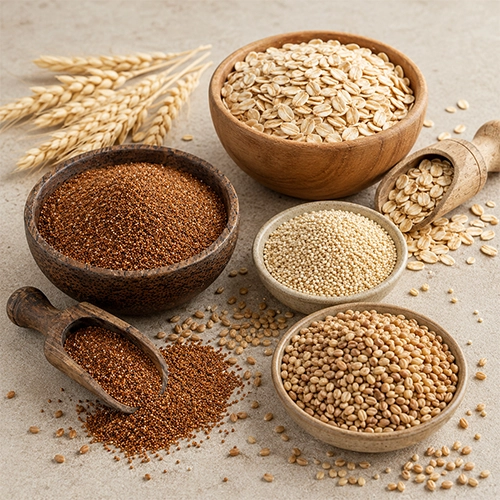
Minor Cereals & Ancient Grains
The Grains That Quietly Nourished Generations
Almost everyone remembers a meal that tasted different from today's. Perhaps it was at your grandparents' home, where lunch was served on a simple plate and every grain carried the warmth of the earth. There was no talk of ‘superfoods’ or ‘special diets.’ A bowl of millets, sorghum, barley, or other wholesome grains was simply part of everyday life. Grandmothers believed these humble harvests gave lasting energy, kept the body light and helped families stay healthy through every season.
Across the Indian subcontinent, farmers treasured resilient grains like finger millet (Ragi), pearl millet (Bajra), foxtail millet and sorghum (Jowar). In China, ancient millets nourished communities for thousands of years. Across Africa, teff, sorghum and pearl millet became symbols of strength in challenging climates, while in the Andes and the Amazon region, grains and seeds such as quinoa and amaranth were valued as gifts from nature that sustained generations. These foods were never chosen because they were fashionable. They earned their place at the family table through trust, nourishment and time.
Today, many of these treasured grains are quietly disappearing from everyday kitchens as highly processed foods take their place. Along with them, the wisdom of traditional farming, seed preservation and age-old recipes is slowly fading, despite the dedication of farming communities who continue to protect these remarkable crops.
Global Source Expo Limited is committed to bringing these forgotten grains back to life. Our Minor Cereals & Ancient Grains collection is inspired by the fields, families and farming traditions that have nourished civilizations for centuries. Behind every carefully selected grain is the patience of a farmer, the resilience of a community and a heritage worth passing to future generations. Because the healthiest future may begin by remembering what once filled our plates with nature's simplest gifts.