
Middle Eastern & North African Blends
Middle Eastern & North African Blends
Middle Eastern & North African Blends: Spice Routes Captured in Bowls
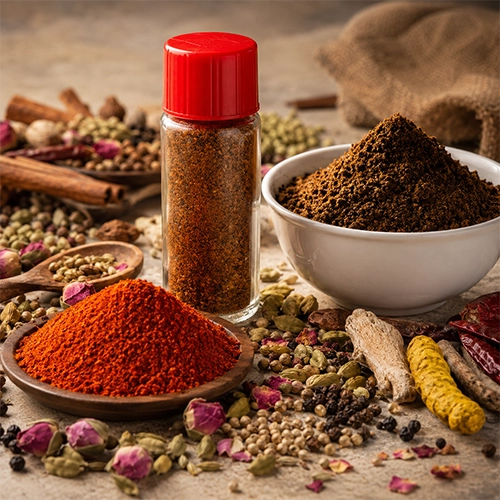
A Moroccan cook reaches for their ras el hanout and knows immediately that they're holding centuries of trade history. The blend contains dozens of spices, some prominent, others whispered in background. Every cook's version differs slightly because ras el hanout means "head of the shop," referring to a spice merchant's personal selection of their finest ingredients. A Tunisian cook prepares harissa by combining chiles, garlic, and spices into a paste that becomes the foundation for countless dishes. A Lebanese kitchen keeps sumac, thyme, and sesame combined as za'atar, ready to scatter across bread or vegetables. These blends aren't industrial standardization. They're cultural expressions where geography, trade history, and generations of culinary wisdom converge.
Middle Eastern and North African blends carry flavors that feel simultaneously complex and balanced. Ras el hanout might contain cinnamon, cumin, coriander, turmeric, paprika, and mysterious additions that define individual merchants' reputations. Dukkah combines nuts, seeds, and spices into a blend meant for dipping bread in olive oil, delivering crunch alongside flavor. Baharat provides warm spicing essential to Arab cooking across the region. These aren't casual combinations. They're thoughtful assemblies reflecting understanding of how spices interact and what creates culinary harmony.
For producers and blenders, creating authentic blends requires respecting regional traditions and understanding how individual spices behave when combined. Master blenders study traditional preparations and develop consistent versions that honor authenticity while enabling commercial scale. Quality sourcing of individual components becomes critical because the final blend is only as good as its weakest ingredient.
For retailers and manufacturers, blend selection reflects authentic positioning. Whole-spice blends appeal to enthusiasts and professional kitchens. Paste versions serve convenience. Sourcing transparency increasingly matters as consumers discover these cuisines and want to understand their origins.
This category connects regional blenders with retailers and chefs who understand that Middle Eastern and North African blends represent trade routes, cultural identity, and the sophisticated flavors defining these celebrated cuisines.
Discover quality blenders. Compare regional varieties. Source blends that honor culinary heritage.