KIDS TOYS and GAMES

KIDS TOYS and GAMES
“Play that teaches, crafted by hands that care.”
Wooden puzzles, learning boards, and handmade games are designed for curiosity and safe play. Smooth finishes and thoughtful design avoid harmful materials.
These toys shape imagination and learning through simple, meaningful interaction.
Makers continue from joy in creating for children despite limited recognition.
Global Source Expo brings these thoughtful toys to families seeking safe, educational play.
Long before screens, children learned about the world through handmade toys.
Popular subcategories under KIDS TOYS and GAMES

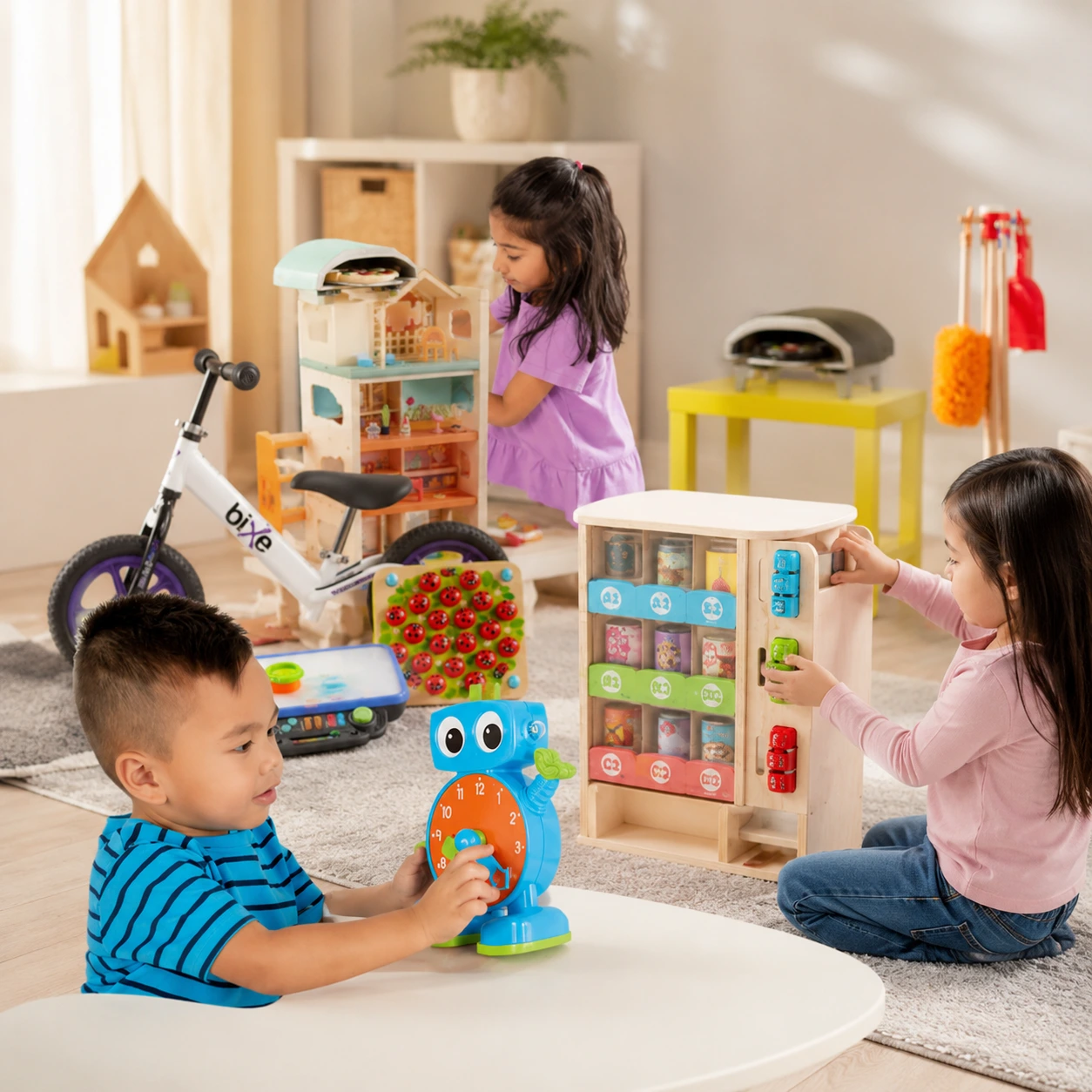
Educational & Learning Toys
Educational & Learning Toys: Building Minds, Shaping Futures
Every parent recognizes that moment. A child sits with a toy and something clicks. Their eyes light up. They lean forward, focused entirely on the problem in front of them. Minutes stretch into hours. They're not just playing. They're learning, discovering, building confidence with each small success. That moment is why educational toys matter so much. They're not frivolous entertainment. They're the bridge between childhood curiosity and genuine development.
The educational and learning toys category thrives because parents increasingly understand something fundamental: what children play with shapes how they think. A puzzle that frustrates a child at first teaches persistence and spatial reasoning. Building blocks develop fine motor skills and creative problem-solving. STEM-focused toys introduce concepts that later become academic foundations. Language toys accelerate vocabulary and communication skills. Parents aren't just buying toys anymore. They're investing in their children's cognitive development, emotional growth, and future potential.
For toy manufacturers, retailers, and distributors, this category demands responsibility alongside business acumen. Educational claims must be genuine, not marketing fantasy. Safety standards must exceed regulatory minimums. Age-appropriateness must be thoughtfully considered, ensuring toys challenge without frustrating. Quality materials matter because children put toys in their mouths, throw them, sit on them, and test every physical limit.
The category connects toy designers and manufacturers with retailers and parents who understand that childhood is finite, that development happens through play, and that the toys surrounding a child deserve to be meaningful, safe, and genuinely enriching.
This space rewards suppliers who combine child development expertise, rigorous safety standards, and authentic educational value with products that spark joy alongside learning.
Discover quality manufacturers. Compare educational frameworks. Source toys that transform playtime into growth.

Building & Construction Toys
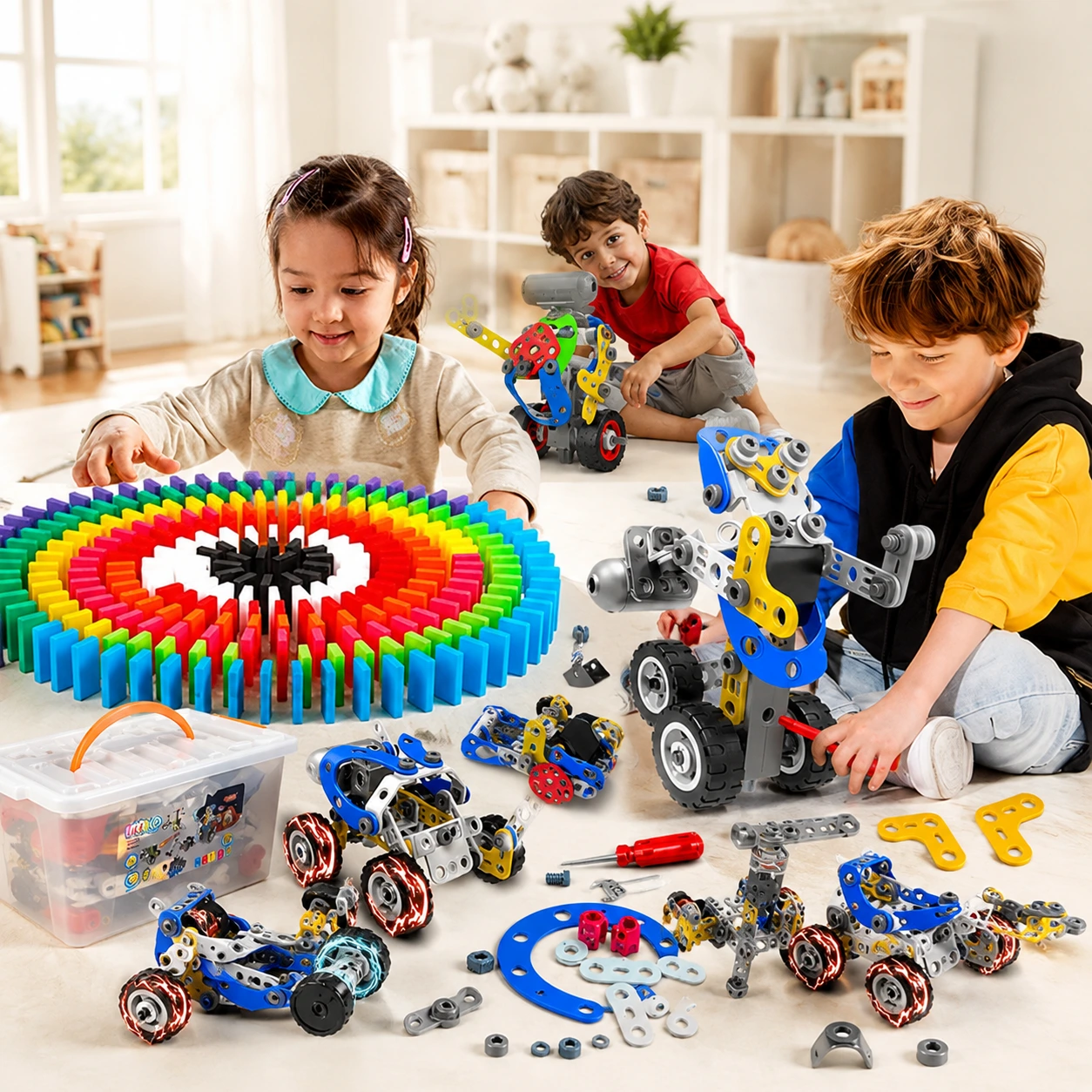
Building & Construction Toys: Creating Architects One Block at a Time
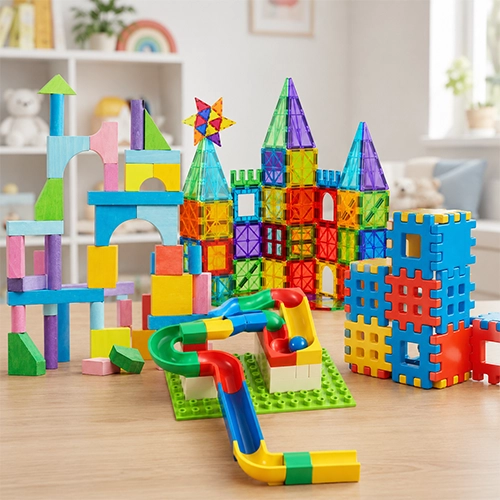
There's something magical about watching a child build. They start with no plan, just imagination and a pile of pieces. They stack, they arrange, they knock down and rebuild. They argue with siblings about design. They show you their creation with pride that seems disproportionate to the structure itself. But they're not just stacking blocks. They're learning how things fit together, how to envision something and then make it real, how to solve problems when their design doesn't work the first time.
Building and construction toys occupy a unique space in child development. They teach spatial reasoning that becomes the foundation for mathematics and engineering. They develop fine motor skills through the act of connecting, stacking, and manipulating pieces. They encourage creative thinking because there's no single right answer. Most importantly, they deliver something children crave: the satisfaction of creating something tangible with their own hands. In a world increasingly dominated by screens, this tactile creation matters deeply.
For manufacturers and retailers, the building and construction category demands quality that's immediately obvious. A brick that doesn't connect properly ruins the entire experience. Pieces that break from normal play betray parent trust. Sets that promise creativity but offer only rigid instruction disappoint. Parents recognize quickly whether they've invested in genuine building systems or expensive frustration.
The category connects toy manufacturers and component suppliers with retailers and parents who value creation, understand that building strengthens developing minds, and recognize that the toys surrounding a child deserve to inspire rather than frustrate.
This space rewards suppliers who combine structural engineering, intuitive design, and durable materials with sets that grow with children from toddlers through teenagers.
Discover quality manufacturers. Compare structural systems. Source building toys that inspire creation.

Games & Puzzles
Games & Puzzles: Where Strategy Meets Connection
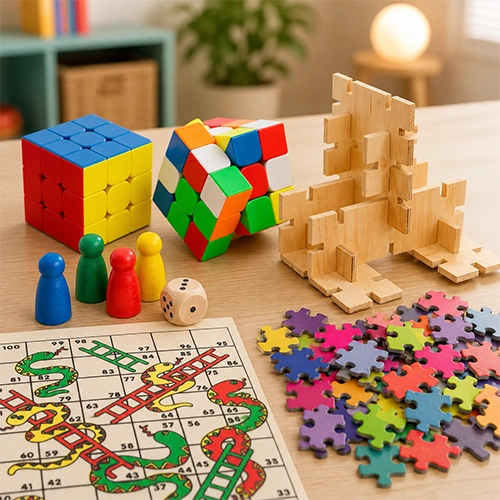
Around a kitchen table on a rainy afternoon, something happens that screens can't replicate. A family sits together with a board game. Someone moves a piece. Someone else laughs at an unexpected turn of events. A child concentrates intently on a puzzle, determined to place the final piece. Conversations happen. Connections deepen. Nobody is scrolling. Nobody is distracted. It's just people together, engaged with something physical and real.
Games and puzzles occupy territory that feels increasingly precious in modern childhood. They teach strategy, patience, and delayed gratification in a world that usually demands immediate results. They develop problem-solving skills through trial and error. They encourage social interaction, negotiation, and healthy competition. Board games teach children to handle winning gracefully and losing with resilience. Puzzles teach persistence through the satisfaction of completing something challenging. These aren't small skills. They're foundational capabilities that shape how children navigate life.
For parents, games and puzzles represent something else entirely: a way to create family moments without screens, to slow down together, to build memories through play. Parents increasingly recognize that childhood moves quickly and that the moments spent around a puzzle or game table matter more than they imagined they would.
For manufacturers and retailers, this category demands authenticity. Rules must be clear and genuinely playable. Puzzle pieces must connect satisfyingly. Games must deliver on their promise of fun, not just educational benefit. Quality construction means games survive multiple plays, traveled to grandparents' houses, and passed along to younger cousins.
The category connects game designers and manufacturers with retailers and families who understand that unplugging together creates something valuable that plugged-in alternatives simply cannot.
Discover quality manufacturers. Compare engagement levels. Source games that build family moments.

Pretend Play & Role Play
Pretend Play & Role Play: The Foundation of Imagination and Empathy
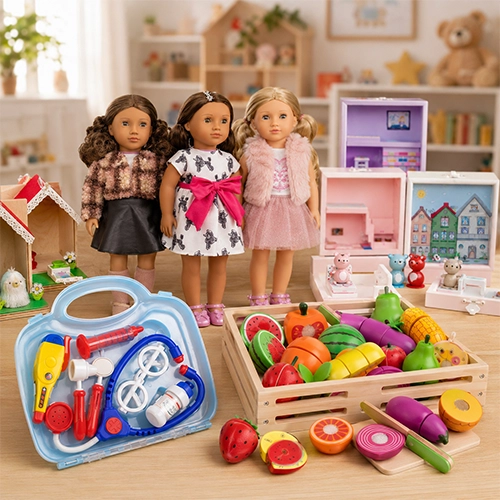
A child puts on a doctor's coat and suddenly becomes a healer. Another child arranges dolls in a dollhouse kitchen, recreating family meals observed a thousand times. A group of children gather with costumes and props, creating elaborate stories that shift and evolve by the minute. They're not just playing. They're practicing life. They're learning what it feels like to be someone else, to solve problems from different perspectives, to navigate social situations in a safe space where mistakes don't matter.
Pretend play is where children develop empathy. When a child cares for a baby doll, they're learning gentleness and responsibility. When they role-play as a teacher, they're understanding authority and patience. When they create imaginary scenarios, they're developing narrative thinking and emotional intelligence. These aren't frivolous activities. They're how children make sense of the world, process experiences, and develop the social and emotional skills that matter as much as academic knowledge.
For parents, pretend play toys represent something deeply valuable. They see their children becoming absorbed in imaginative worlds where creativity flourishes and anxiety decreases. They recognize that role-play toys offer something rare: unstructured play that belongs entirely to the child, not directed by screens or algorithms.
For manufacturers and retailers, this category demands versatility and quality construction. Play kitchens need real doors that open smoothly. Doctor kits need convincing props that inspire confidence. Costumes need comfortable fit and durable seams because children wear them repeatedly. Quality materials mean toys survive intense, imaginative play and last long enough to pass to younger siblings.
The category connects toy designers and manufacturers with retailers and families who understand that imagination is a superpower and that pretend play is where it develops.
Discover quality manufacturers. Compare role-play systems. Source toys that unlock creativity.

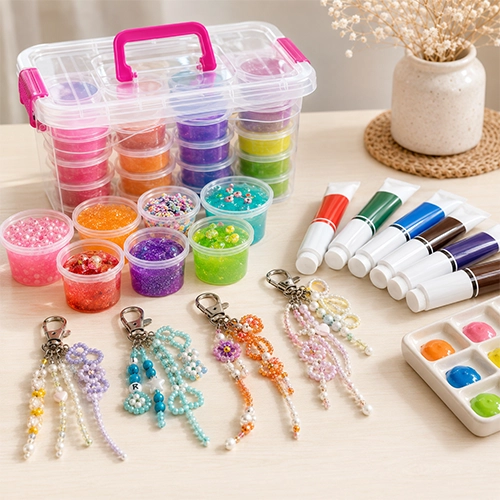
Arts & Crafts
Arts & Crafts: Creativity Unleashed, One Project at a Time
A child sits with markers and paper and creates something utterly their own. There's no right answer. There's no judgment. A parent holds up a painted masterpiece that looks like nothing recognizable but means everything to the child who made it. That's the essence of arts and crafts. It's pure expression without performance pressure. It's the space where children discover their own creativity without worrying whether they're "doing it right."
Arts and crafts serve a development purpose that goes far beyond entertainment. They develop fine motor skills through cutting, gluing, painting, and sculpting. They encourage self-expression and emotional processing. A child might paint anger in bold red strokes or create a collage that represents their favorite memory. They explore cause and effect as they discover what happens when watercolor meets wet paper or when glue dries. They learn patience as they wait for paint to dry or glue to set. Most importantly, they experience the satisfaction of creating something tangible that didn't exist before they imagined it.
For parents, arts and crafts represent something complicated. They love watching their children create, but they dread the mess. They want materials that inspire imagination without requiring hours of cleanup. They appreciate quality supplies that perform as promised. A marker that doesn't bleed through paper. Paint that washes out of clothes. Scissors that actually cut cleanly without frustration.
For manufacturers and retailers, this category demands balance between quality, safety, and practical usability. Supplies need to inspire without overwhelming. Colors should be vibrant and true. Materials should be non-toxic because children put things in their mouths. Sets should include everything needed to start creating immediately without requiring additional purchases.
The category connects craft manufacturers and supply companies with retailers and families who believe that creative expression matters, that mess is part of the process, and that the joy of making something is worth the cleanup.
Discover quality suppliers. Compare material options. Source crafts that inspire creation.

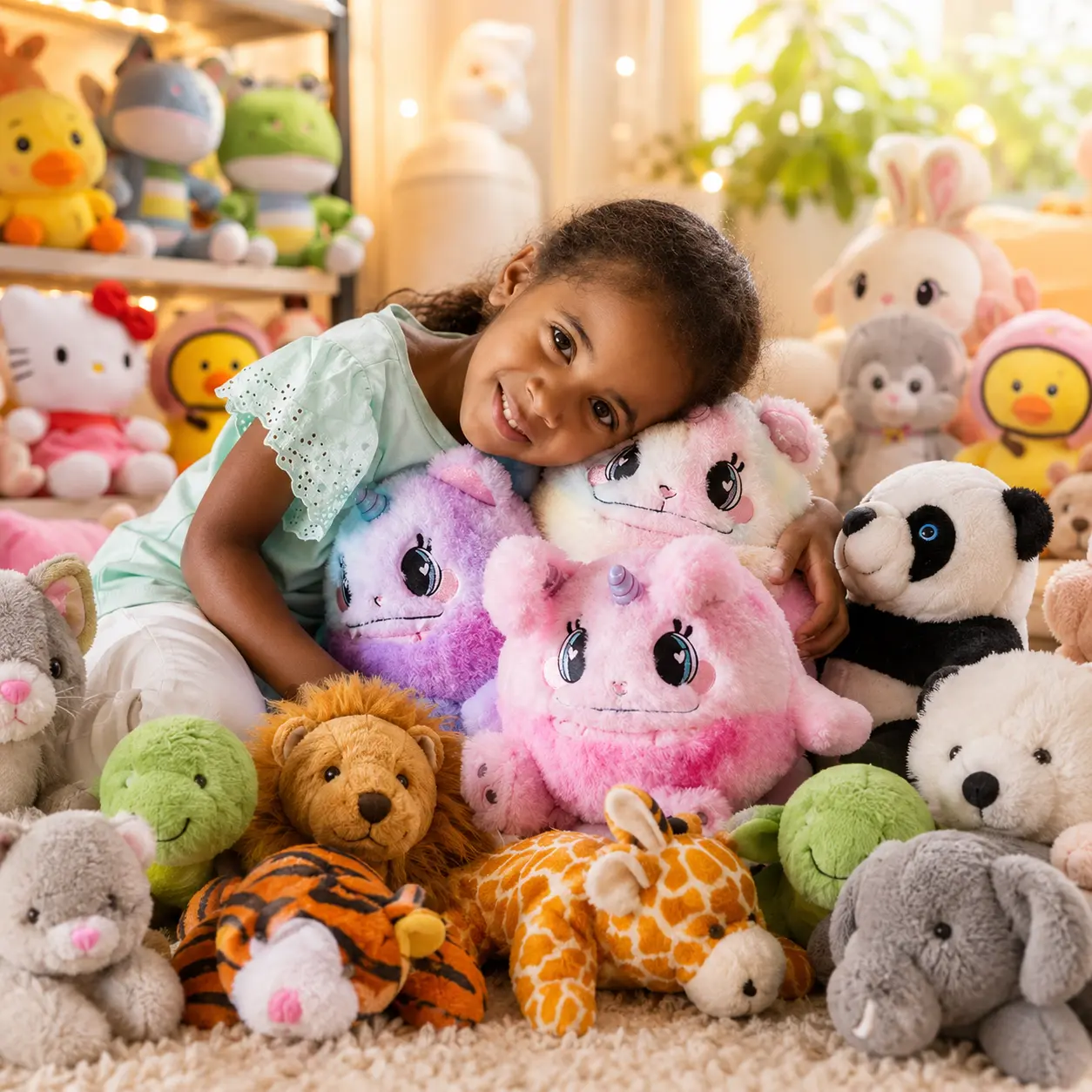
Plush & Stuffed Toys
Plush & Stuffed Toys: Comfort in a Soft, Huggable Form
A child carries the same stuffed animal everywhere. It sleeps with them, travels with them, gets dragged through adventures and accidentally left behind at restaurants. Parents find themselves doing laundry specifically to wash this single beloved toy because the child refuses to sleep without it. That worn, faded plush isn't just a toy. It's security. It's a confidant. It's the physical manifestation of comfort during difficult moments.
Plush toys occupy a unique emotional space in childhood. They're the first friends children choose. They're what children hold when they're scared or sad. They're the companions that make transitions easier. Starting school feels less frightening when a familiar plush comes along. Separation from parents feels manageable when a beloved stuffed animal stays close. Developmental psychologists understand what parents know intuitively: plush toys provide real emotional comfort that supports healthy development during vulnerable periods.
For parents, plush toy quality matters intensely because these aren't toys that get forgotten quickly. These are toys that become irreplaceable. Parents invest in quality stitching because that beloved toy will be hugged thousands of times. They choose materials that wash well because the toy will be filthy and cherished simultaneously. They prefer toys that feel soft and inviting because comfort is the entire point.
For manufacturers and retailers, this category demands attention to detail that might seem trivial but actually matters profoundly. Seams must be reinforced to survive vigorous hugging. Stuffing must be high quality and secure so toys don't shed. Eyes and noses must be firmly attached because toddlers pull. Fabrics should be soft, washable, and durable enough to survive hundreds of cycles through the washing machine.
The category connects manufacturers and suppliers with retailers and families who understand that plush toys aren't luxury items. They're emotional support systems disguised as toys.
Discover quality manufacturers. Compare durability standards. Source plush toys that become childhood companions.

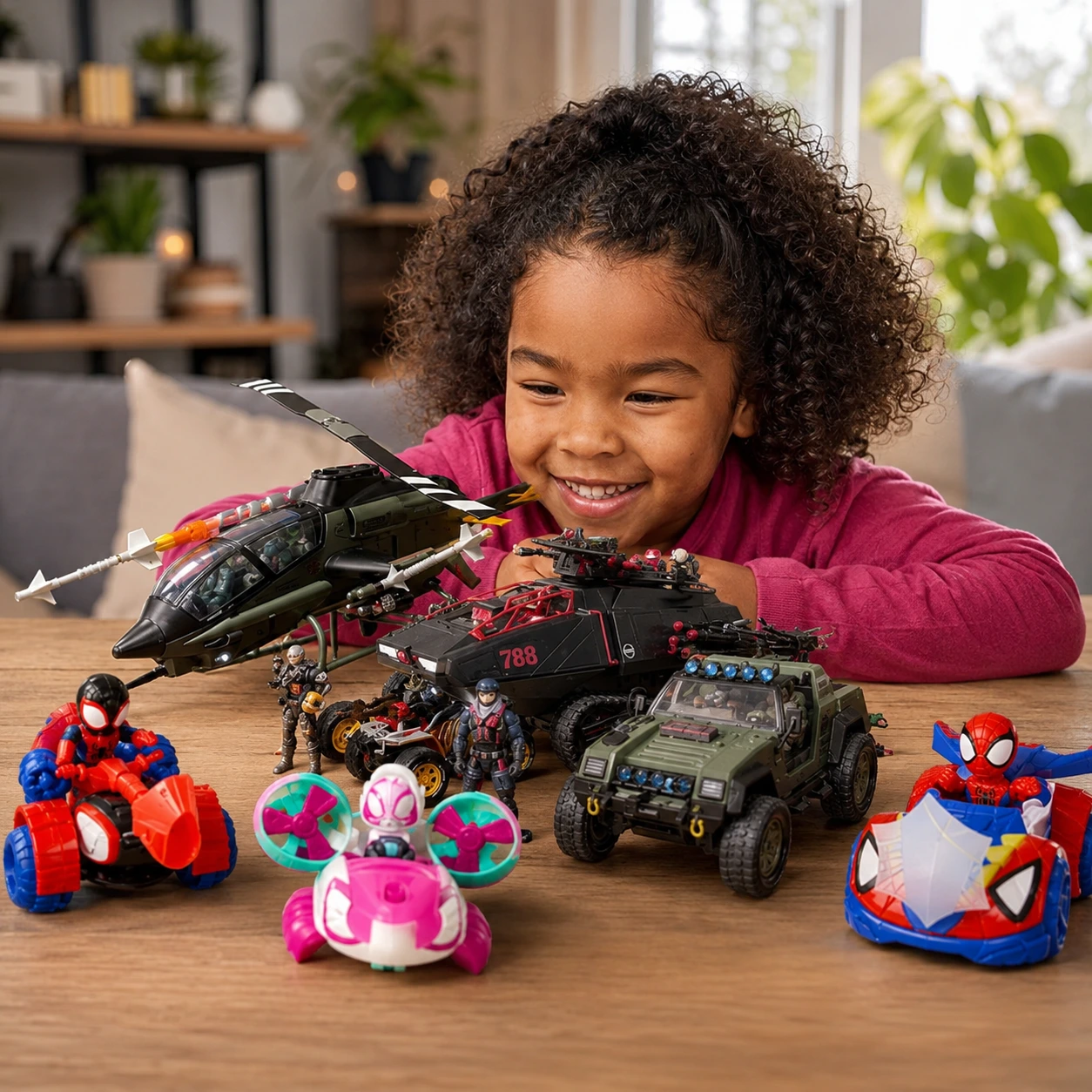
Vehicles & Action Toys
Vehicles & Action Toys: Adventure in the Palm of Your Hand
A child sprawls on the floor with a toy car, making engine sounds that somehow perfectly capture the rumble of a real vehicle. Another child lines up action figures and creates elaborate narratives that shift minute by minute. A group of children races toy trucks across the driveway, cheering and strategizing. These aren't passive toys. They're launchpads for imagination and adventure that can sustain a child's focus for hours.
Vehicles and action toys serve a crucial role in how children play and learn. They encourage imaginative storytelling. A simple car becomes a race car, a police vehicle, a delivery truck for a secret mission. Action figures inspire narrative play where children create complex stories with multiple characters and plotlines. Children learn cause and effect as they experiment with how vehicles move and interact with their environments. They develop fine motor skills through manipulating small pieces and coordinating multiple toys simultaneously. Most importantly, these toys empower children to create their own entertainment, their own rules, and their own adventures without requiring screens or batteries.
For parents, vehicles and action toys represent value when they're durable enough to survive rough play. A car that loses its wheels after three days of use betrays parent trust. An action figure that breaks at the joints disappoints. Parents recognize quickly whether they've invested in toys that will last or toys that will end up in the trash.
For manufacturers and retailers, this category demands quality engineering disguised in fun design. Wheels must roll smoothly. Joints must articulate without breaking. Paint must resist scratches and wear. Details matter because children notice and appreciate authenticity.
The category connects toy designers and manufacturers with retailers and families who understand that vehicles and action toys unlock imagination and provide hours of genuine entertainment.
Discover quality manufacturers. Compare durability features. Source toys that inspire endless adventure.

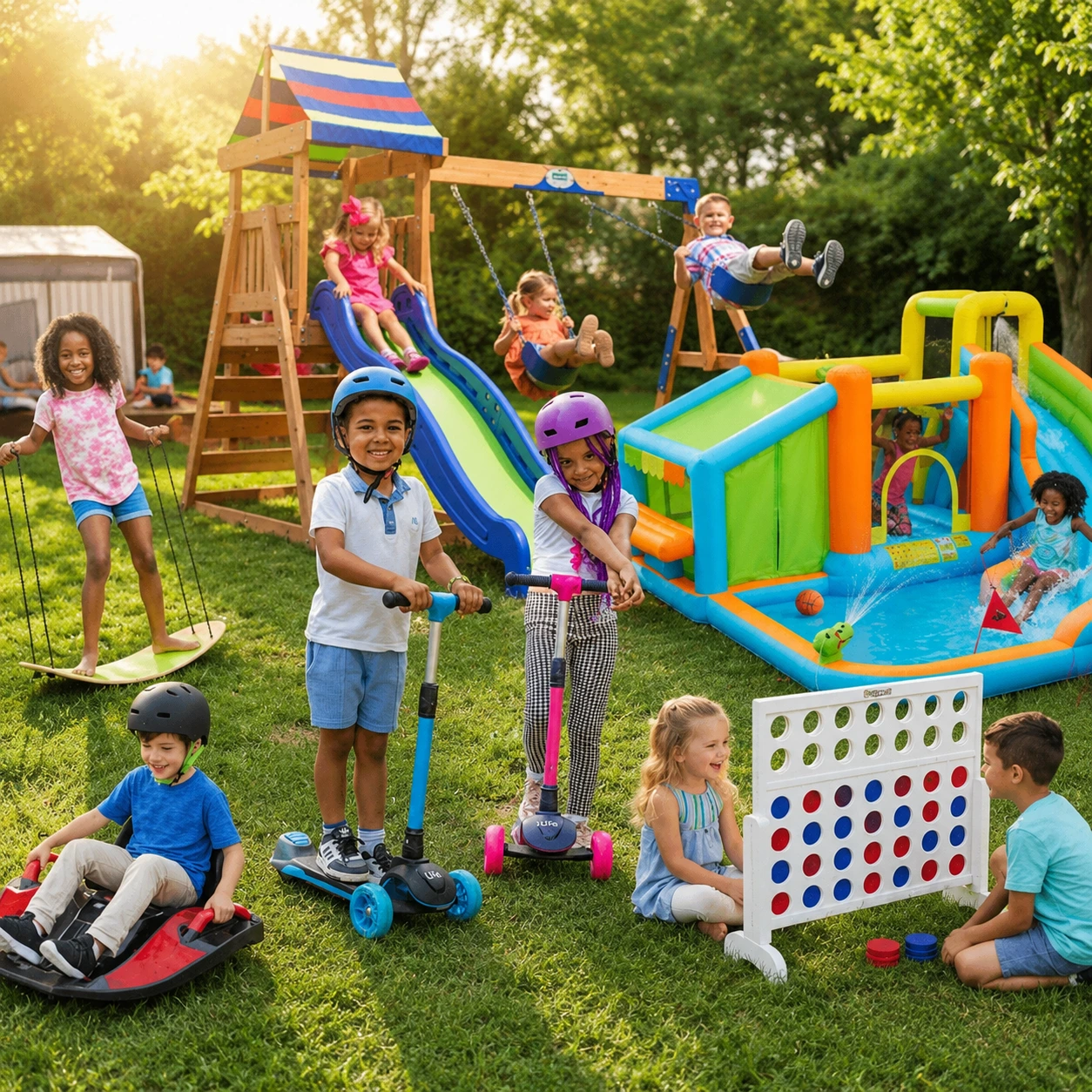
Outdoor & Sports Toys
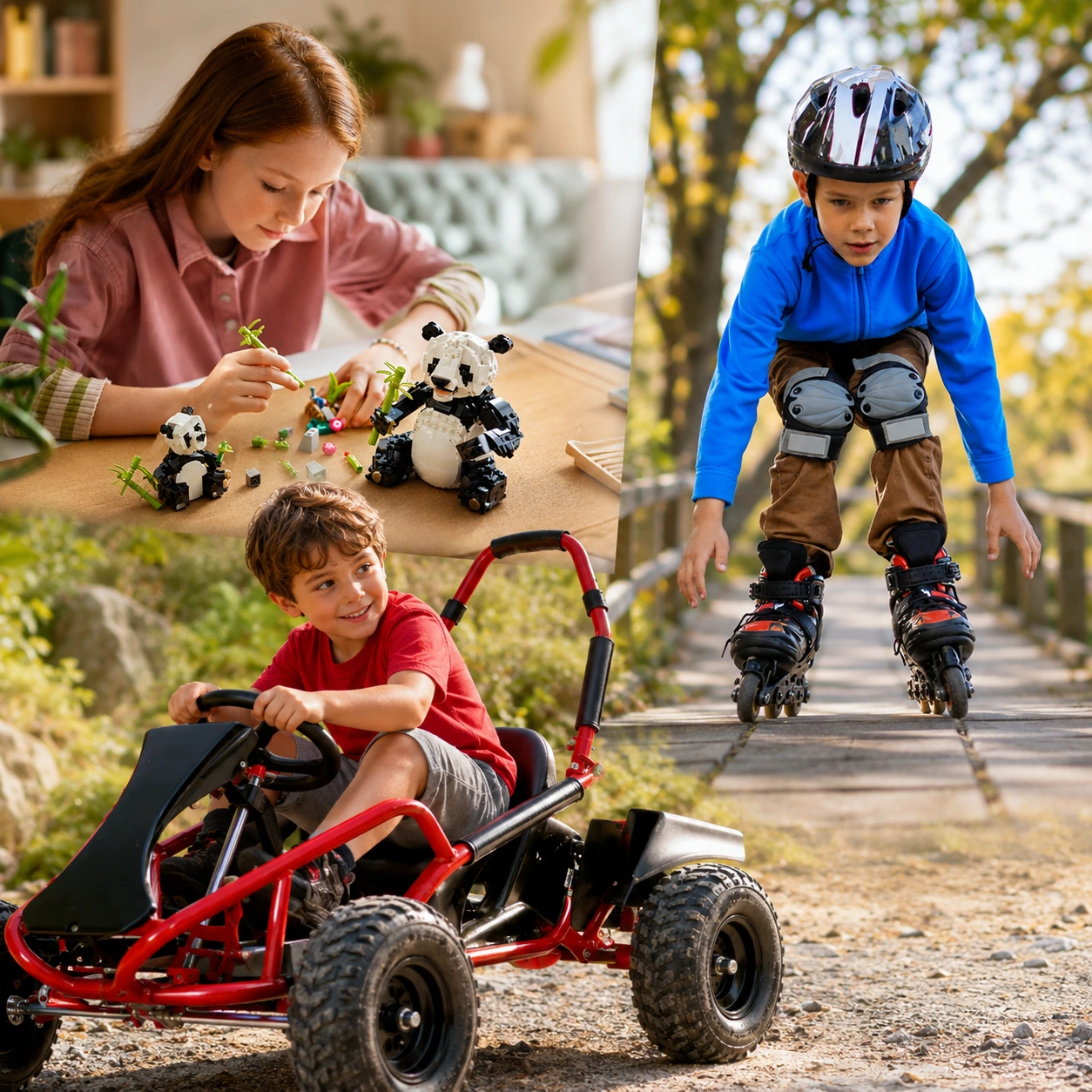
Outdoor & Sports Toys: Movement, Fresh Air, and Growing Strong
Children used to play outside by default. The neighborhood was their playground. Games happened organically with whatever equipment was available. A stick became a baseball bat. A rope became a jump game. Gravity and imagination were the only limits. Today, outdoor play requires intention. Parents actively decide to send children outside. They purchase toys and equipment that transform yards and parks into spaces worth leaving a screen for. That decision matters more than it might appear because children who play outside move differently, think differently, and develop differently than children who remain indoors.
Outdoor and sports toys serve a purpose that goes far beyond entertainment. They encourage physical activity at a time when childhood obesity rises and sedentary screen time dominates. They develop gross motor skills through running, jumping, climbing, and balancing. They build confidence as children master new physical challenges. They teach resilience through falling and trying again. They create social opportunities where children learn negotiation, teamwork, and healthy competition. Most importantly, they connect children with nature and fresh air in ways that nourish development that indoor alternatives simply cannot replicate.
For parents, outdoor sports toys represent an investment in their children's health and happiness. Parents recognize that time outside reduces anxiety, improves sleep, and creates memories that matter. They seek equipment that's durable enough to withstand weather and intense play while remaining safe for developing bodies.
For manufacturers and retailers, this category demands safety alongside durability. Materials must resist weathering and UV damage. Equipment must support growing children without breaking under stress. Sharp edges must be eliminated. Surfaces must be forgiving because falls happen.
The category connects toy and equipment manufacturers with retailers and families who believe movement matters, that outdoor play nourishes childhood development, and that the investment in quality equipment pays dividends across years.
Discover quality manufacturers. Compare safety standards. Source toys that get children outside.

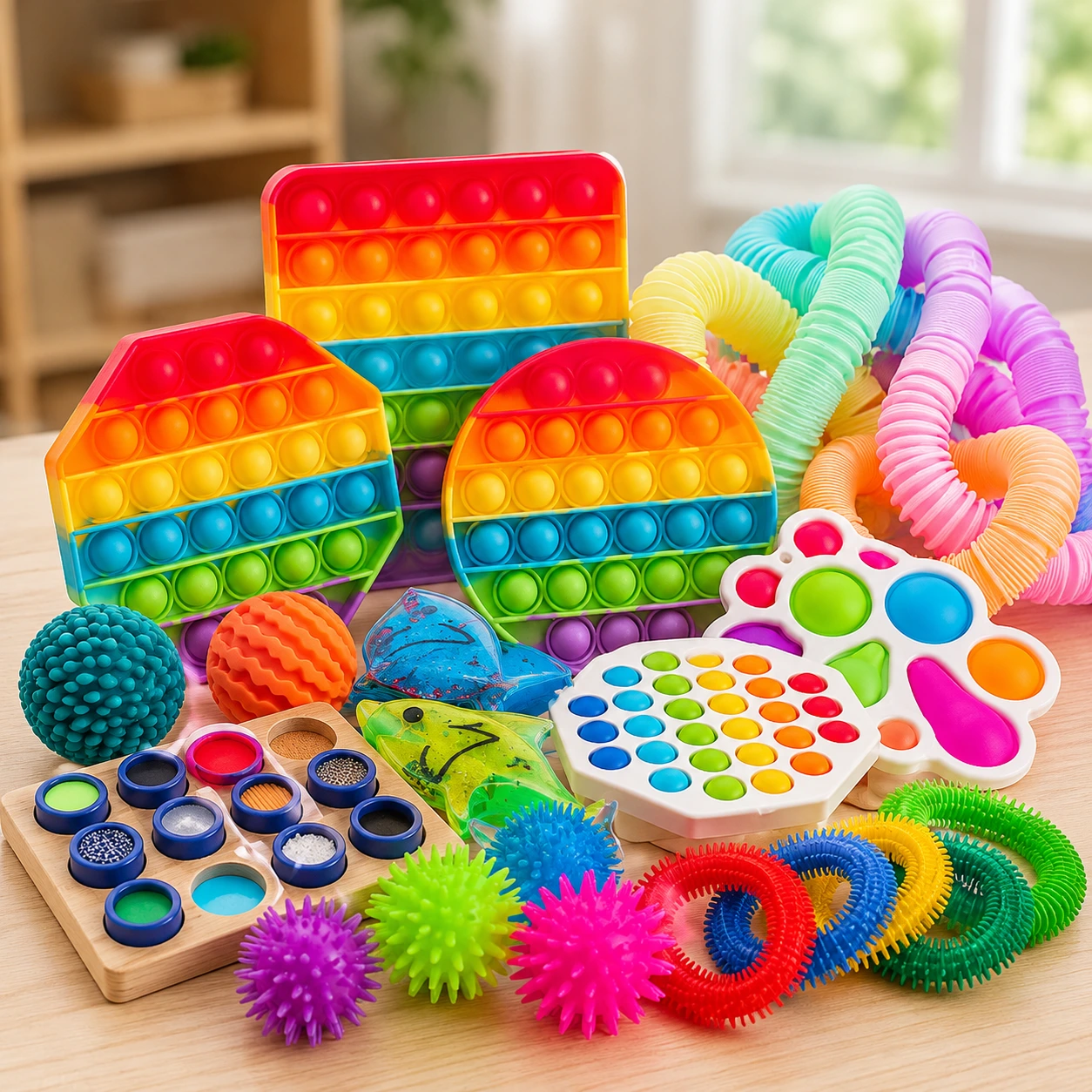
Sensory & Fidget Toys
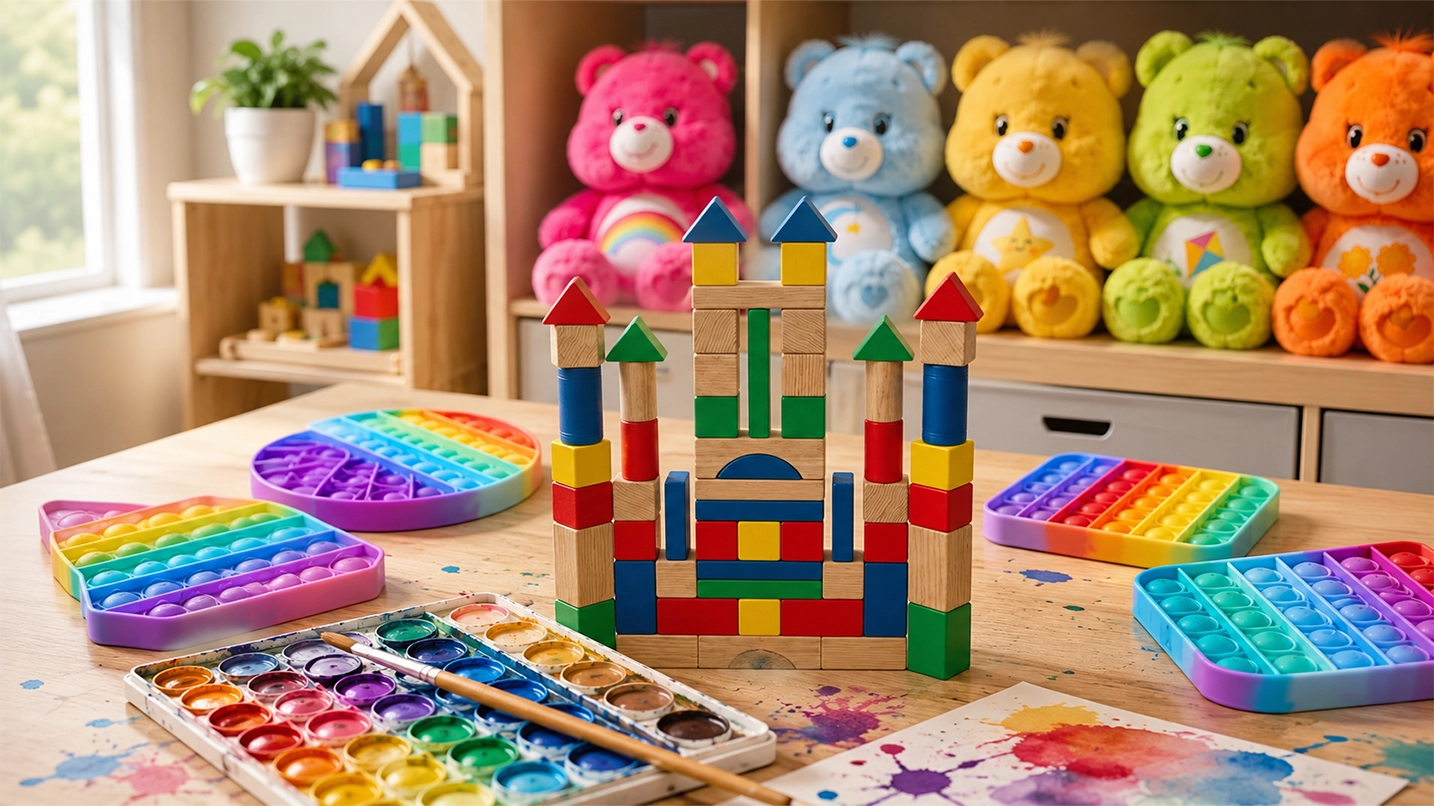
Sensory & Fidget Toys: Calm in Motion, Focus in Your Fingers
A child sits in a classroom struggling to concentrate. Their leg bounces. Their fingers fidget with something under the desk. Then a teacher offers a fidget toy. Suddenly, something shifts. The constant motion finds an outlet. The restless energy channels into something productive. The child can finally focus on learning. That moment reveals something important: fidgeting isn't always distraction. Sometimes it's exactly what a brain needs to settle and concentrate.
Sensory and fidget toys serve purposes that were barely recognized a decade ago. They help children with anxiety find something calming to hold and manipulate. They provide sensory input that certain brains crave for regulation and focus. They offer a physical outlet for restless energy that allows concentration to happen. For children with autism, ADHD, or general anxiety, these toys represent real tools for self-regulation, not frivolous distractions. For neurotypical children, sensory toys simply feel good to use, providing satisfying tactile experiences that engage the brain positively.
Parents increasingly understand that sensory toys aren't luxury items or signs of developmental problems. They're legitimate tools that help children manage their nervous systems. A parent watching their anxious child calm down while using a fidget toy recognizes immediately that something valuable is happening. A parent of a child with autism sees their child access focus and peace through sensory input that toys provide.
For manufacturers and retailers, this category demands sensitivity alongside quality. Toys need to provide genuine sensory satisfaction through materials and mechanisms that perform reliably through repeated use. Textures should feel genuinely interesting. Pop-its should pop satisfyingly hundreds of times. Stress balls should compress smoothly without losing shape. Construction must be durable because these toys get used intensely and frequently.
The category connects toy designers and manufacturers with retailers and families who understand that sensory and fidget toys help children regulate their nervous systems and access the calm and focus they need.
Discover quality manufacturers. Compare sensory options. Source toys that support regulation and wellbeing.

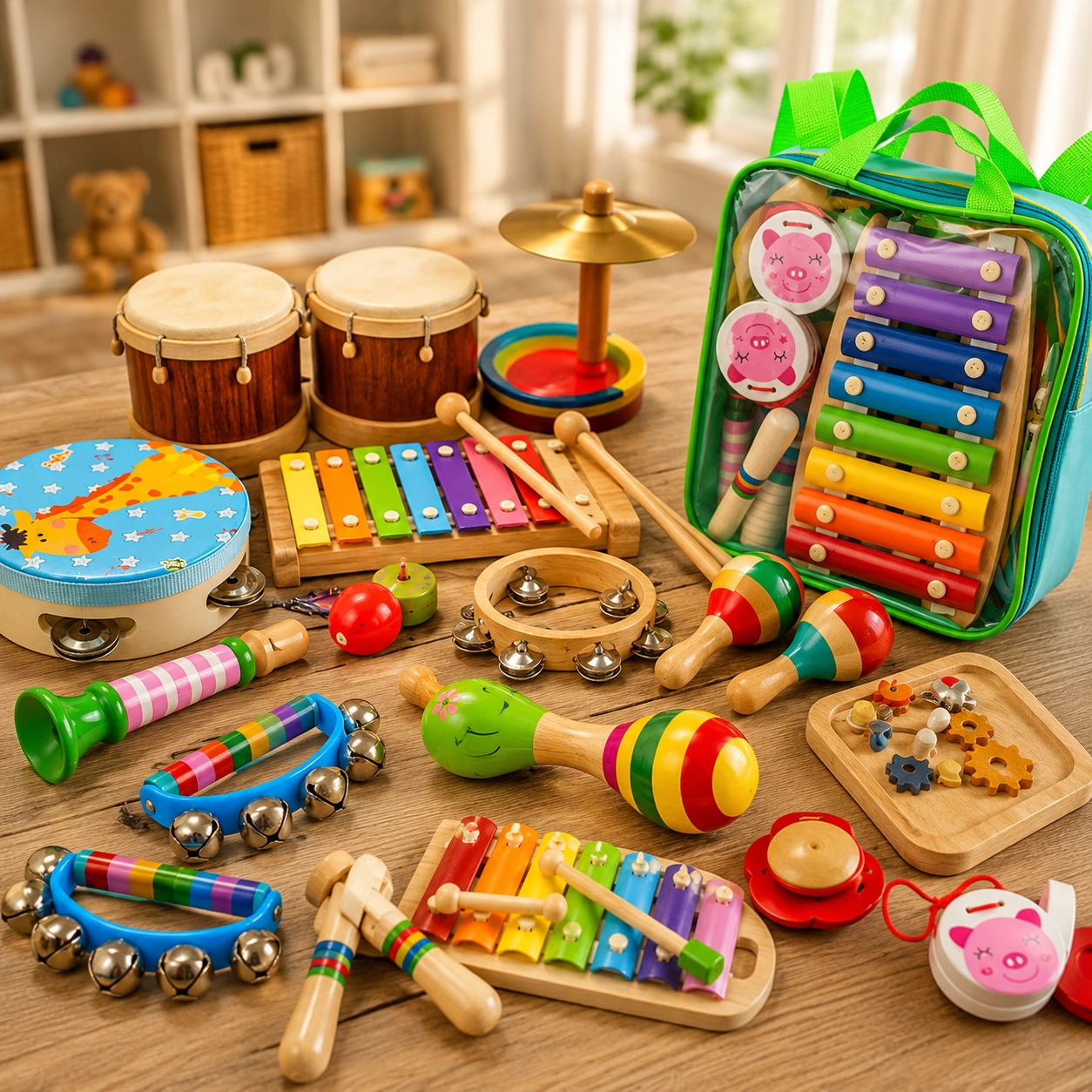
Musical Toys & Instruments
Musical Toys & Instruments: The Sound of Childhood Development
A toddler discovers a xylophone and begins striking the bars with pure delight. Each strike produces a different sound. The child discovers cause and effect with their ears. A slightly older child picks up a ukulele and learns their first song, experiencing the magic of creating recognizable music with their own hands. A teenager receives a quality beginner guitar and suddenly opens a door to self-expression that words alone could never provide. These moments are where musical development begins. They're where children discover whether music will become a lifelong passion or simply a pleasant part of childhood.
Musical toys and instruments serve crucial developmental purposes. They introduce children to sound, rhythm, and melody in ways that engage both sides of the brain. They develop fine motor skills through finger placement and hand coordination. They teach patience as children practice and improve. They provide emotional expression when words aren't enough. Most importantly, they spark joy. A child who makes music experiences accomplishment that few other activities can match.
For parents, musical toys represent an investment in their children's cultural development and emotional wellbeing. Parents recognize that music enriches childhood and provides tools for self-expression that serve children throughout life. They seek instruments that sound good and feel satisfying to use because a toy that sounds tinny or plays off-key discourages rather than inspires.
For manufacturers and retailers, this category demands quality that's immediately obvious to ears and hands. Instruments must be tuned correctly. Materials must resonate properly. Construction must survive enthusiastic playing without breaking. Age-appropriate sizing ensures children can actually hold and manipulate instruments comfortably.
The category connects instrument manufacturers and toy designers with retailers and families who believe music matters, that early exposure shapes musical development, and that quality instruments inspire passion.
Discover quality manufacturers. Compare sound quality. Source instruments that spark musical joy.

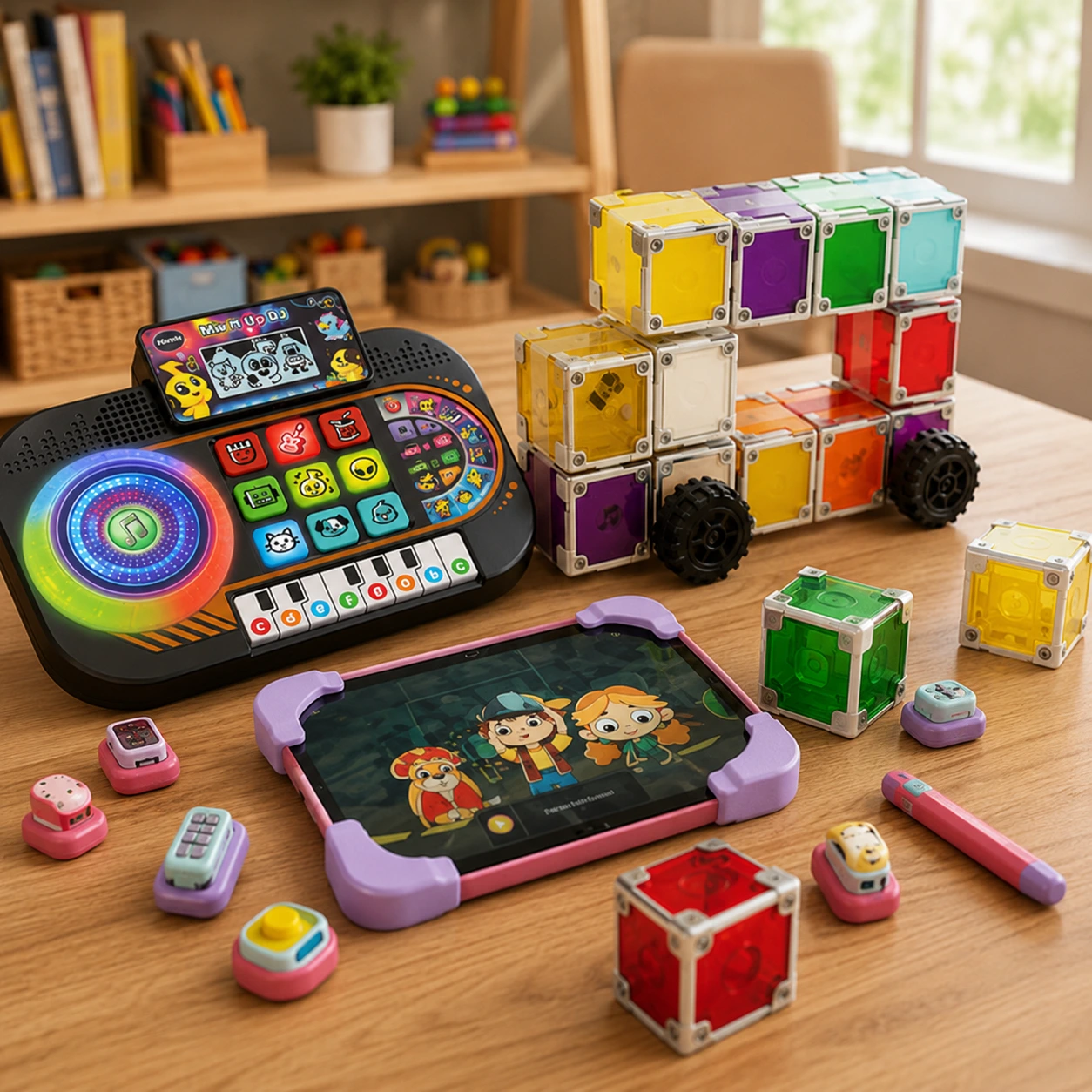
Electronic & Interactive Toys
Electronic & Interactive Toys: Technology That Engages and Educates
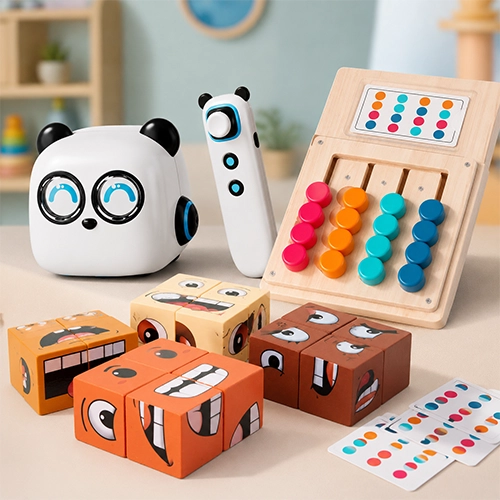
A toy lights up and speaks. A child presses a button and the toy responds with a different sound or movement. Another child holds a tablet-connected robot and watches it follow their commands across the floor. These aren't toys from a generation ago. They're the intersection of technology and play, designed to captivate young minds through interactivity and immediate feedback that engages children deeply.
Electronic and interactive toys occupy complicated territory in modern childhood. Critics worry that screens and technology undermine imaginative play. Parents recognize that well-designed interactive toys can teach coding basics, language skills, and problem-solving through engaging gameplay. The truth sits somewhere in the middle. A toy that merely flashes lights mindlessly offers little developmental value. A toy that responds intelligently to a child's input, encourages experimentation, and teaches concepts through interactive play becomes a genuine learning tool.
The best electronic and interactive toys do something crucial: they respond to children rather than simply displaying predetermined sequences. A toy that learns from a child's patterns, adapts its difficulty level, and celebrates achievements creates engagement that captures attention meaningfully. Educational content delivered through interactive play sticks better than passive instruction. Children retain language vocabulary learned through interactive toys more effectively than through traditional methods.
For parents, the appeal lies in balance. They appreciate toys that teach while entertaining. They value products that grow with their children, adapting as skills advance. They seek manufacturers who prioritize safety and age-appropriate content.
For manufacturers and retailers, this category demands careful engineering. Technology must work reliably. Batteries must last reasonably. Content must be genuinely educational and engaging, not simply distracting.
The category connects technology manufacturers and toy designers with retailers and families who understand that interactive toys can meaningfully enhance childhood learning when designed thoughtfully.
Discover quality manufacturers. Compare educational frameworks. Source interactive toys that teach through engagement.

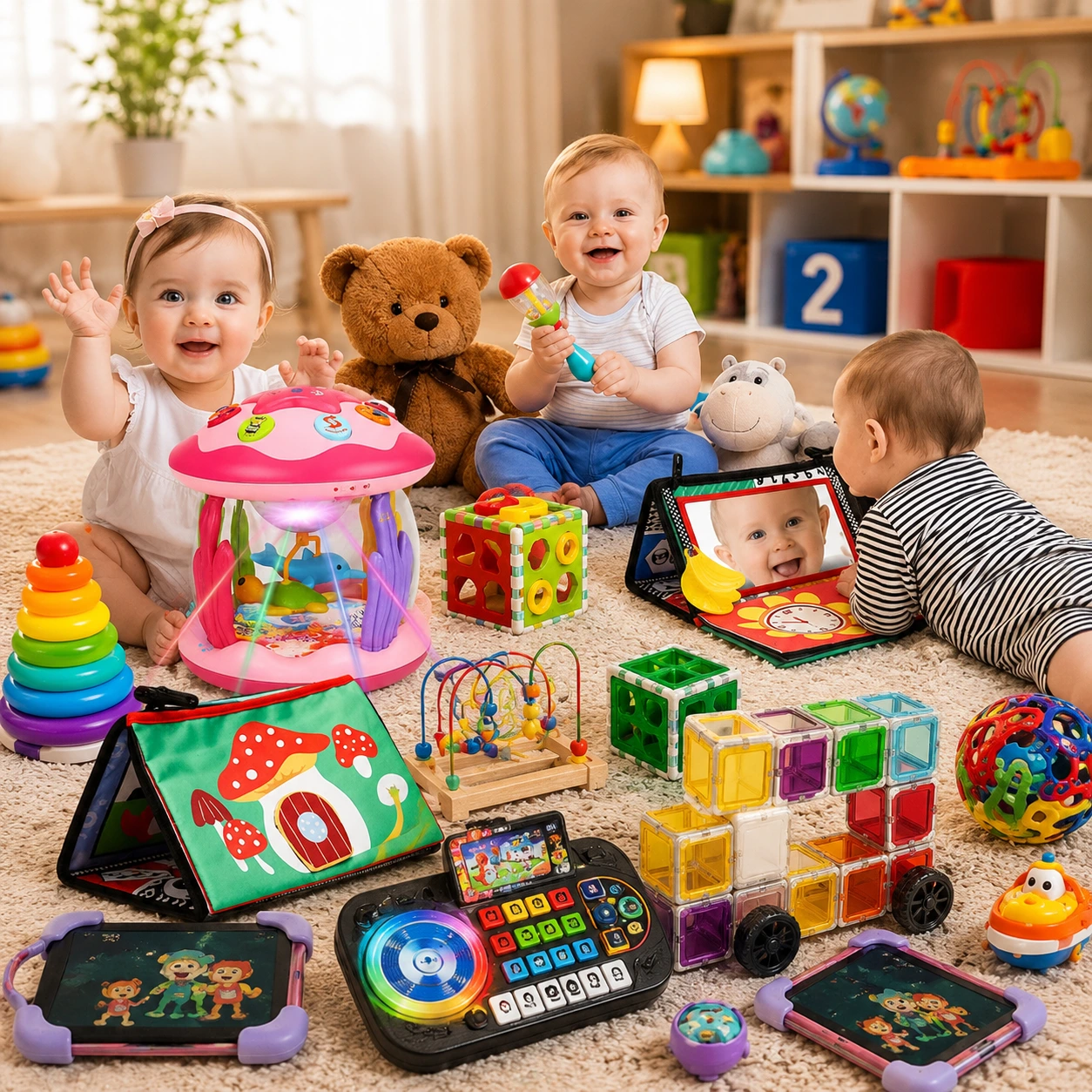
Baby & Toddler Toys (0-3 Years)
Baby & Toddler Toys (0-3 Years): The Foundation of Early Development
A newborn grasps a toy for the first time, their tiny fingers wrapping around something soft. A three-month-old reaches for a rattle and discovers that shaking it produces sound. A one-year-old stacks blocks clumsily, then knocks them over with delight. A two-year-old pushes a toy across the floor, discovering cause and effect. These simple moments are actually crucial. During these first three years, a child's brain develops faster than at any other period of life. The toys surrounding a baby during this window genuinely matter because they're tools for that extraordinary development.
Baby and toddler toys serve purposes that go far beyond keeping a child entertained. They introduce sensory experiences. Textures, sounds, and visual patterns help developing brains make connections. They encourage motor skill development. Reaching, grasping, and manipulating toys strengthen muscles and coordination that lead to crawling and eventually walking. They teach cause and effect. A baby discovering that shaking a rattle produces sound learns something fundamental about how the world works. They provide comfort during transitions. A familiar toy eases separation anxiety and helps babies feel secure.
For parents, baby toy quality becomes obsessively important because these are toys for their most vulnerable children. Parents agonize over materials, researching whether plastic is truly safe or whether wood is better. They worry whether toys have been tested thoroughly. They want to know whether products are designed thoughtfully for tiny hands and mouths. Every purchase carries emotional weight because parents are investing in their baby's health and development.
For manufacturers and retailers, this category demands responsibility that supersedes profit. Materials must be genuinely non-toxic. Construction must prevent choking hazards. Design must support rather than undermine development. Age-appropriateness must be carefully considered because a toy perfect for a three-month-old might frustrate a two-year-old.
The category connects manufacturers and suppliers with retailers and families who believe that early childhood matters profoundly and that toys deserve to support development safely and thoughtfully.
Discover quality manufacturers. Compare safety certifications. Source toys that nurture infancy.

Preschool Toys (3-5 Years)
Preschool Toys (3-5 Years): Building Confidence, Nurturing Independence
A three-year-old demands to do everything themselves. They want to dress their own doll, operate their own toy kitchen, build their own structure. Their frustration when they can't quite manage something is real and fierce. But the moment they succeed, their pride is unmistakable. They've accomplished something independently and they know it. That window between ages three and five is when children transform from toddlers into people. They develop language at explosive rates. They begin friendships with other children. They discover independence and want to exercise it constantly.
Preschool toys serve the developmental demands of this pivotal period. They encourage social interaction as children begin playing with peers rather than just alongside them. They support language development through pretend play and storytelling. They build fine motor skills through manipulating smaller pieces and more complex mechanisms. They nurture independence by allowing children to accomplish tasks successfully. They foster problem-solving as children encounter challenges that require thinking through solutions.
For parents, preschool toys represent something shifting. Parents recognize their children are becoming more independent, more social, more capable. Toys that encourage these developments feel like investments in their growing competence. Parents seek toys that captivate during transitions. A quality toy occupies a child while a parent manages dinner or a sibling. Parents appreciate toys that multiple children can play with together because socialization becomes increasingly important.
For manufacturers and retailers, this category demands toys that inspire without overwhelming. Instructions should be clear and intuitive. Toys should challenge appropriately without causing frustration. Quality construction ensures toys survive increasingly vigorous play from children discovering their own strength.
The category connects toy designers and manufacturers with retailers and families who understand that preschool is where children bloom into independent thinkers and social beings.
Discover quality manufacturers. Compare developmental benefits. Source toys that nurture growth.

Kids Toys (5-8 Years)
Kids Toys (5-8 Years): Where Interests Ignite and Identities Form
A child comes home from school excited about something they discovered. Maybe it's dinosaurs. Maybe it's space. Maybe it's building things or creating art. Parents recognize immediately that this isn't fleeting. Their child is developing real interests. They want toys and books and activities centered around this passion. Suddenly, toy selection becomes more intentional. Parents are no longer just trying to keep a child entertained. They're supporting the emergence of who their child is becoming.
The five to eight year age group represents a significant shift in toy needs. Children are developing independence and confidence through mastering skills and completing challenges successfully. They're forming genuine friendships and want toys that invite social play and cooperation. They're developing hobbies and specific interests that feel important to them. They're learning to follow complex rules and enjoy games with strategy and competition. They're discovering their own identities separate from their parents and wanting toys that reflect who they're choosing to become.
Toys for this age group need to honor these developments. Building sets become more complex, supporting creative ambition without overwhelming. Games teach strategy and social interaction. Science kits encourage experimentation and discovery. Sports equipment allows skill development and physical confidence. Art supplies support creative self-expression. Collectibles feed the passion for organizing and achieving completion. Quality matters intensely because these aren't toys that get forgotten quickly. These are toys that support identity formation and genuine interest development.
For parents, toy selection becomes thoughtful rather than reflexive. Parents ask questions. Does this toy support their child's actual interests? Will it hold their child's attention or end up in the closet? Does it encourage skill development and confidence? Parents appreciate toys that challenge appropriately without causing frustration. They value toys that invite social interaction because friendship becomes increasingly central to their child's happiness.
For manufacturers and retailers, this category demands understanding of how children think at this developmental stage. Instructions matter because children follow complex directions but need them clearly presented. Toys should deliver on their promises. A building set should produce satisfying results. A game should be genuinely fun to play repeatedly. Quality construction means toys survive the vigorous play of children testing their growing strength and confidence.
The category connects toy designers and manufacturers with retailers and families who understand that the toys surrounding a child during these formative years support the development of competence, identity, and genuine joy in discovery.
Discover quality manufacturers. Compare interest-specific options. Source toys that nurture growing passions.

Older Kids Toys (8+ Years)
Older Kids Toys (8+ Years): The Edge Between Childhood and Growing Up
A ten-year-old walks into a store and suddenly the toys that captivated them a year ago look babyish. They want something that feels sophisticated, something that their friends would think is cool. They want projects that require real skill and patience to complete. They want to feel genuinely challenged. Parents recognize this shift immediately. Their child is no longer simply playing. They're developing serious interests that might shape hobbies lasting into adulthood.
The eight plus age group operates in a complicated space between childhood and adolescence. Children are developing real expertise in their interests. A child fascinated by dinosaurs wants detailed fossil replicas and paleontology kits, not simplified picture books. A child interested in building wants advanced construction sets that produce impressive results, not basic beginner blocks. A child interested in art wants quality supplies that honor their growing skill level. These aren't casual interests anymore. They're the foundations of identity and potential lifelong passions.
Toys for this age group need to respect that evolution. Remote control vehicles become sophisticated machines with real engineering. Model building sets offer complexity that rewards patience and attention to detail. Science kits explore genuine concepts rather than simplified demonstrations. Board games feature real strategy and meaningful competition. Sports equipment supports skill development seriously. Art supplies offer professional quality that honors developing artistic ability. These toys acknowledge that children at this age are capable of real accomplishment and deserve tools that make that accomplishment possible.
For parents, toy selection becomes collaborative. They ask their children what they want because children increasingly have genuine opinions about their own interests. Parents appreciate toys that hold their child's attention for extended periods, toys that support developing skills, toys that children choose to engage with rather than toys parents push toward them.
For manufacturers and retailers, this category demands respect for growing sophistication. Instructions should be clear but assume capability. Toys should deliver genuine challenge and satisfying results. Quality construction ensures tools work properly and support skill development.
The category connects manufacturers with families who understand that toys at this age become gateways to lifelong interests and genuine accomplishment.
Discover quality manufacturers. Compare complexity levels. Source toys that honor growing expertise.